The APOTHECARY
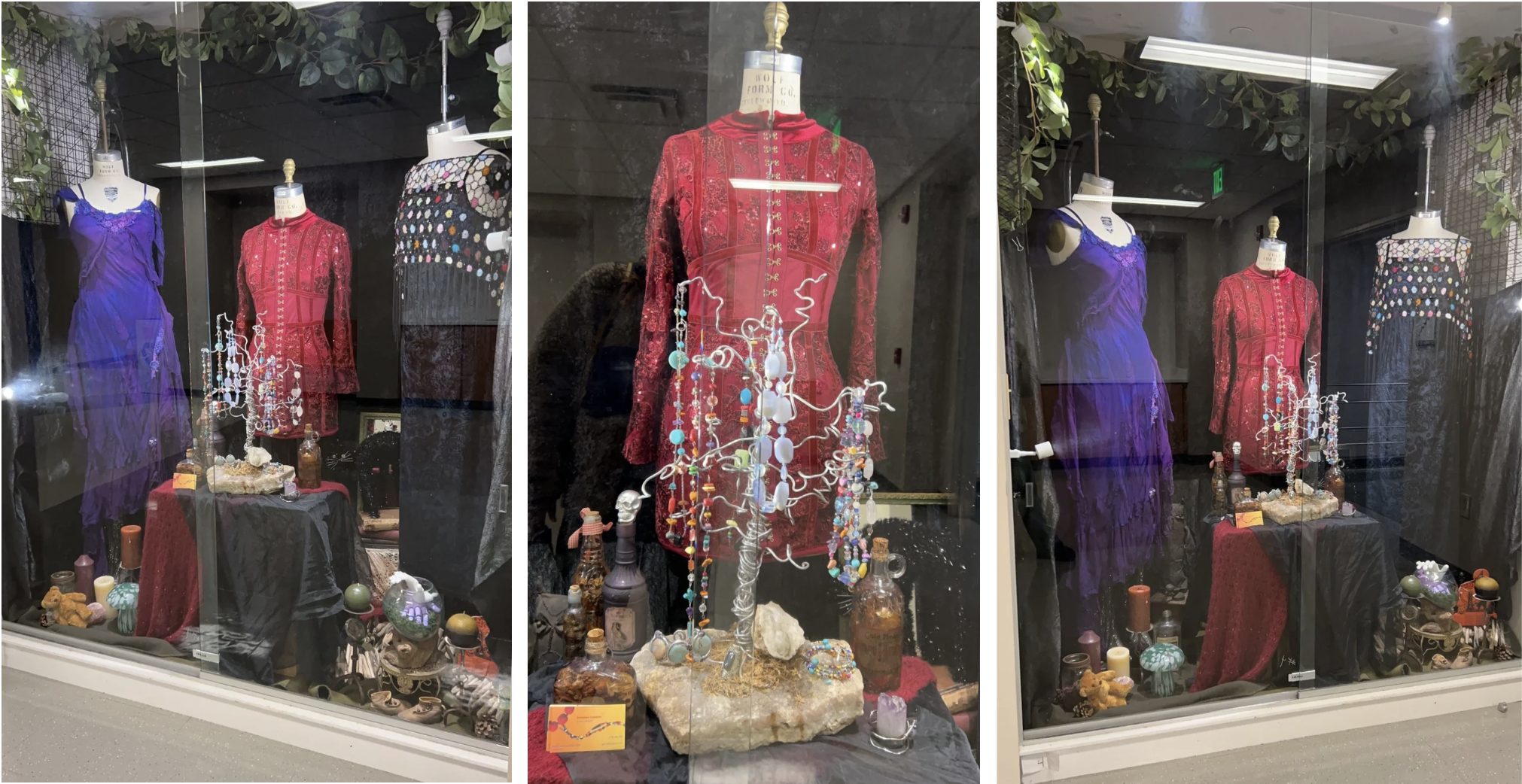
Developed as a collaborative visual merchandising project at Ball State University, this Halloween display draws inspiration from the nostalgic atmosphere of Hocus Pocus while creating an original interpretation of a whimsical witch’s cabin/apothecary. Rather than replicating the film, the concept uses its iconic themes as a creative foundation, incorporating three distinct witch-inspired ensembles, antique props, and layered environmental storytelling to immerse viewers in a magical retail experience. Every aspect of the display was carefully curated to evoke curiosity, nostalgia, and a sense of enchantment for the target consumer.
The design process emphasized intentional styling and visual cohesion, beginning with the selection of three richly textured dresses that established the display’s color palette and overall direction. An analogous scheme of jewel tones and earth tones was reinforced through luxurious fabrics including velvet, satin, tulle, and viscose, as well as embellishments such as sequins, floral appliqués, and rhinestones. Strategic layering and accessory choices enhanced each silhouette while creating continuity across the display, allowing every mannequin to maintain its own identity within a unified composition.
Environmental design played an equally important role in communicating the narrative. Antique books, preserved botanicals, vintage bottles, candles, infant shoes, and mystical objects referenced themes of witchcraft and folklore, while green felt flooring and black tulle backdrops established the illusion of an outdoor forest meeting the interior of a secluded cabin. Draped fabrics, cascading vines, fallen props, and an arched black cat introduced movement and whimsy, encouraging viewers to explore the display from multiple perspectives and discover new details throughout the scene.
Fundamental elements and principles of design informed every visual decision. Color, texture, line, proportion, and space were intentionally manipulated to create depth and guide the viewer’s eye, while unity, harmony, asymmetrical balance, repetition, emphasis, contrast, and movement worked together to produce a cohesive composition. The mannequins were positioned to direct attention toward the central jewelry display, using subtle sightlines and varying heights to establish rhythm and visual hierarchy. By combining nostalgic storytelling with strategic merchandising techniques, the project demonstrates how immersive environments can elevate seasonal retail displays into memorable customer experiences that blend fantasy, fashion, and thoughtful design.